

Headhunting is when a recruiter finds you first, before you ever apply anywhere. Instead of putting up a job listing and hoping the right person sees it, a headhunter goes and picks that person out directly — someone who’s probably not even looking for a new job — and starts a conversation with them. It flips the usual hiring order on its head.
What Does Headhunting Really Mean? An Example
Say a company needs a CFO. It could post the job and wait around, but the people who’d actually be great at it aren’t browsing job boards. So a headhunter does the opposite: research CFOs already working elsewhere, check their track record, and reach out quietly to a shortlist of maybe five or six names. Nobody applied for anything. Someone was found and asked.
Recruitment waits for people to raise their hand. Headhunting goes looking for the hand worth raising.
How Does the Full Headhunting Process Actually Work?
Define the exact role — Client explains the exact hiring need.
Map the talent market — Search firm researches likely candidates.
Approach the shortlist — Selected people get a private message.
Assess candidate fit — Real interest and skills get tested.
Manage the full offer — Firm carries talks through to joining.
It’s a slower process than posting a job ad, and that’s the point. Rushing it defeats the purpose of reaching someone who wasn’t already looking to leave.
Active Candidates vs Passive Candidates in Hiring
An active candidate is already applying, sending resumes, sitting through interviews. A passive candidate isn’t doing any of that. They’re employed, generally content, and not checking job boards on a Tuesday night. Most of headhunting is really about this second group. The best person for a senior or specialist role is often someone who was never going to apply on their own — someone had to go find them first.
Headhunting vs Recruitment: What’s the Real Difference?
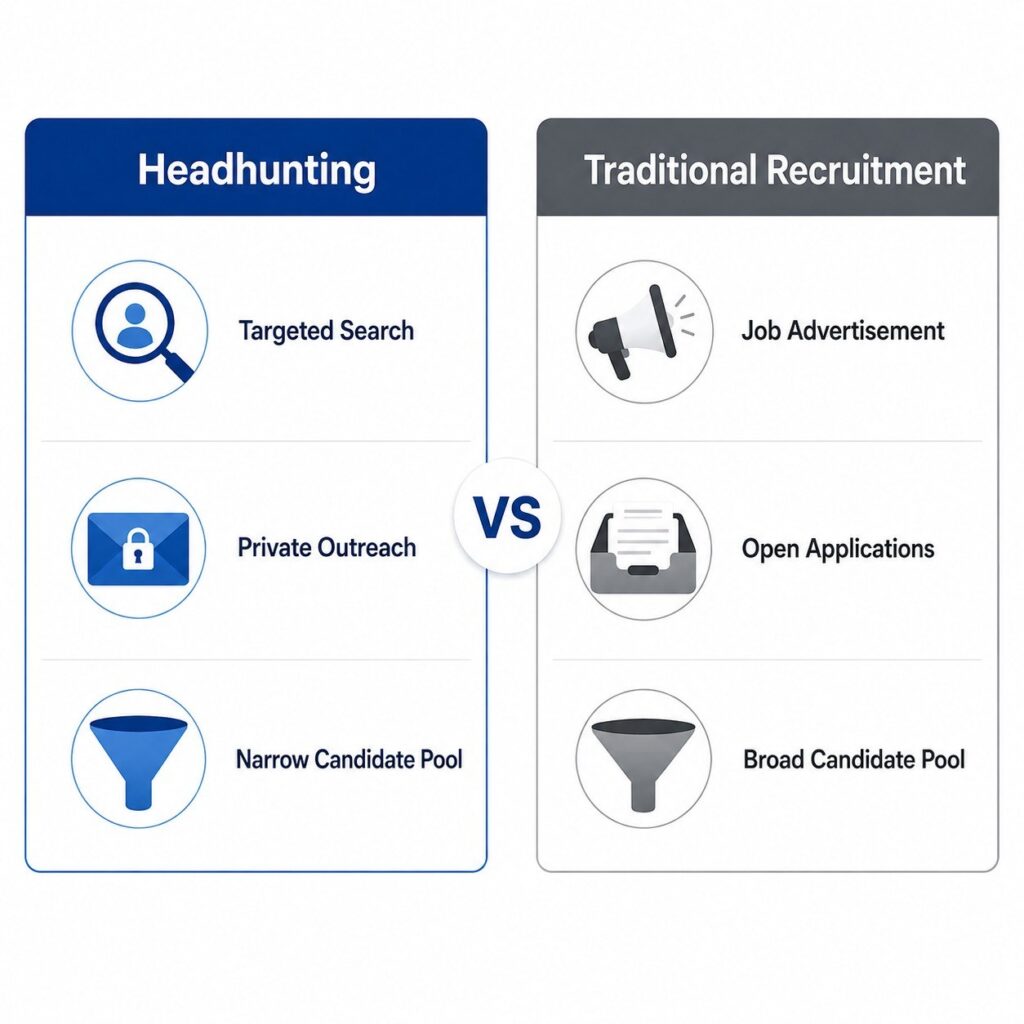
Traditional recruitment posts a role and waits. Headhunting skips that step and goes straight to the person.
The sourcing approach — One attracts, the other hunts.
Candidate pool size — Wide open versus narrow, always.
How outreach happens — Public ad versus a quiet message.
Where each one wins — Easy roles versus impossible ones.
Is headhunting technically a type of recruitment? Yes — it’s a narrower, more deliberate branch of it, not a separate industry. If your company is weighing the two for an upcoming leadership hire, Human Asset’s headhunting services page covers how the process runs for specialist and senior roles specifically.
What Happens When a Headhunter Contacts You Directly?
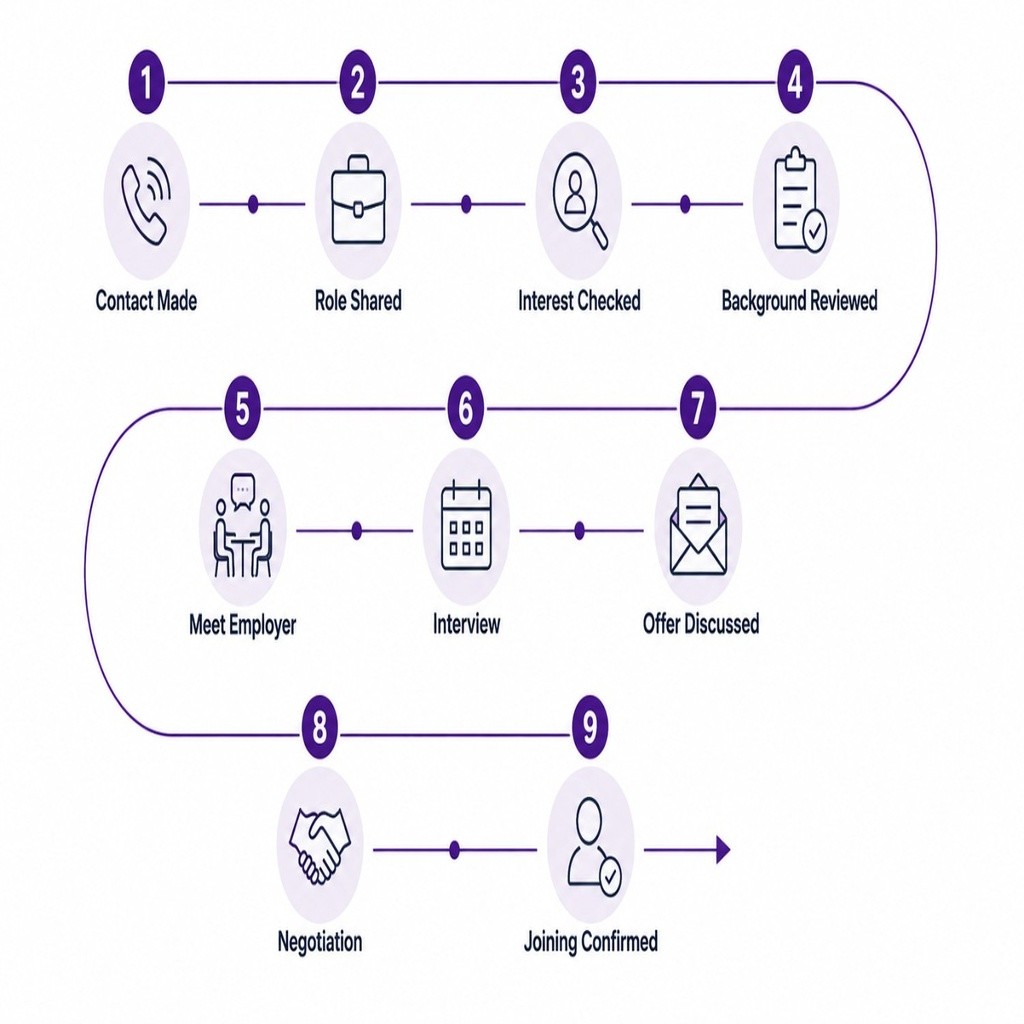
Most candidates go through a version of this without ever thinking of it as a “process.”
Headhunter makes contact — Someone reaches out about a role.
Opportunity gets shared — Role and company details come next.
Are you even open? — A quick check on your interest.
Background gets a look — Your experience and fit reviewed.
An actual introduction — An actual intro to the company.
Interview stage begins — The client meets you directly.
The offer terms land — Compensation and terms explained.
Numbers get worked out — Both sides settle on final terms.
A start date is set — Transition timing gets locked in.
Worth replying even if you’re happy where you are — a fifteen-minute call costs you nothing. What should actually make you pause is if anyone asks you for money along the way. A real headhunter never charges the candidate, full stop.
When Should a Company Actually Use a Headhunter?
For executive hiring — CFOs, CEOs, senior leadership roles.
For specialist roles — Skills too rare for open applications.
For confidential hires — Replacing someone without public news.
For hard-to-fill roles — Positions sitting open for months already.
If applications are already coming in for a role, headhunting probably isn’t worth it. It earns its keep once the normal channels have been tried and clearly haven’t worked.
How Much Does Headhunting Really Cost a Business?
The hiring company pays, not the candidate — usually a cut of the role’s first-year salary. Retained search asks for payment upfront and at set checkpoints along the way. Contingency search only gets paid once someone’s actually hired. There’s also fixed-fee pricing, which tends to show up for narrower roles where the brief is already tightly defined.
So does a candidate ever pay? No, not normally. If someone tries to charge a candidate at any stage, that’s not a fee structure — that’s a scam.
Frequently Asked Questions on Headhunting Basics
What is headhunting in simple words?
Someone reaches out to you first — you don’t apply, you get asked.
How is headhunting different from recruitment?
One waits for applications to arrive. The other goes out and finds people.
What is a passive candidate?
Someone who isn’t job-hunting but might still listen if the opportunity is right.
Who pays the headhunter — the company or the candidate?
The company. Nearly always. A candidate being asked to pay is a red flag.
How do headhunters find candidates?
Professional networks, referrals, and a fair amount of direct digging into who’s who in a given field.
How can I tell if a headhunter is legitimate?
They can name the client or the role. And they never ask you for a rupee.
If you are looking for the best promos and bonuses, look no further. I have had a great run since I joined phbonus88