

You need four people. By Monday. Not next month.
That’s usually the actual starting point — not some strategy meeting about workforce flexibility. A floor supervisor calls, three orders just landed, and HR is still sitting on a headcount approval from last Tuesday. This is what contract and temporary staffing is for. That gap. The one between “we need someone” and “we have someone.”
And no — contract and temporary aren’t the same thing. People say them like they are. Not quite right. Close, but not right.
Temporary Staffing, Plainly
Short and defined. Two weeks covering someone’s maternity leave. Four months for the festival rush. Sometimes six weeks because a machine broke and the vendor’s still arguing about warranty terms.
The agency is the legal employer here. Payroll, PF, ESIC — all of it sits with them, not you. You just point and say “stand there, do this.”
Works well when:
- The spike is predictable — Diwali, year-end closing, exam season if you’re in ed-tech
- You need someone in the seat in 3-5 days, not three weeks of interviews
- The role doesn’t need six months to become useful — most warehouse and retail roles don’t
Contract Staffing — A Bit More Layered
This one takes longer to explain, honestly.
Skilled or semi-skilled roles — IT support, accountants, engineers, sometimes a mid-level project manager — hired for a defined project or term. Six months. Eighteen months. We had one client run a contract role past the two-year mark because the project kept extending and nobody wanted to disrupt it.
Agency still handles compliance. But the engagement itself runs deeper. There’s a scope of work document. Sometimes a notice period. Sometimes a conversion clause — where, if both sides agree, the contract hire moves onto your permanent payroll after a set stretch.
One client near Pune ran an eleven-month warehouse automation project with fourteen contract engineers. None of them ever touched the internal payroll system. Finance didn’t even flag them as “external” headcount in their quarterly review — that’s how cleanly it sat outside the books. Quiet. Which is kind of the point.
Where People Get Confused
Not the same as outsourcing. Not the same as gig work either, though the lines blur for some folks.
- Outsourcing — you hand over a whole function, like a call center, and someone else runs it independently
- Gig work — task-based, app-driven mostly, no fixed hours, no real supervision from you
- Contract/temp staffing — the work stays inside your operations. Your floor, your process, your supervisor. Someone else just handles who’s technically employing them.
Why Companies Actually Do This
Not because it’s trendy right now. Because the numbers hold up.
- Lower fixed cost — no PF, gratuity, bonus liability sitting on your books for a role that might not exist by December
- Faster hiring — a decent partner deploys in days, not the usual 30-45 day cycle for a full-time hire
- Compliance stops being your problem — labour law shifts state to state, constantly, and someone has to track it. Doesn’t have to be you
- Scale down without drama — project ends, headcount ends, no severance mess, no awkward one-on-one about a role that was never meant to last
- Niche skills for short bursts — you don’t need a full-time SAP consultant. You need one for eleven weeks, maybe less.
What Nobody Puts On The Brochure
Should say this part plainly, because most vendors skip it.
- Loyalty runs thinner — a contract hire knows the end date, and that changes how some people show up.
- Knowledge leaves when the contract ends, unless someone’s documenting along the way. (usually nobody is)
- Not every role fits this. Leadership, anything needing deep institutional trust — still needs a permanent hire.
- Invoice margins aren’t always clear. Ask what’s actually included before you sign anything.
Temporary vs. Contract — Side by Side
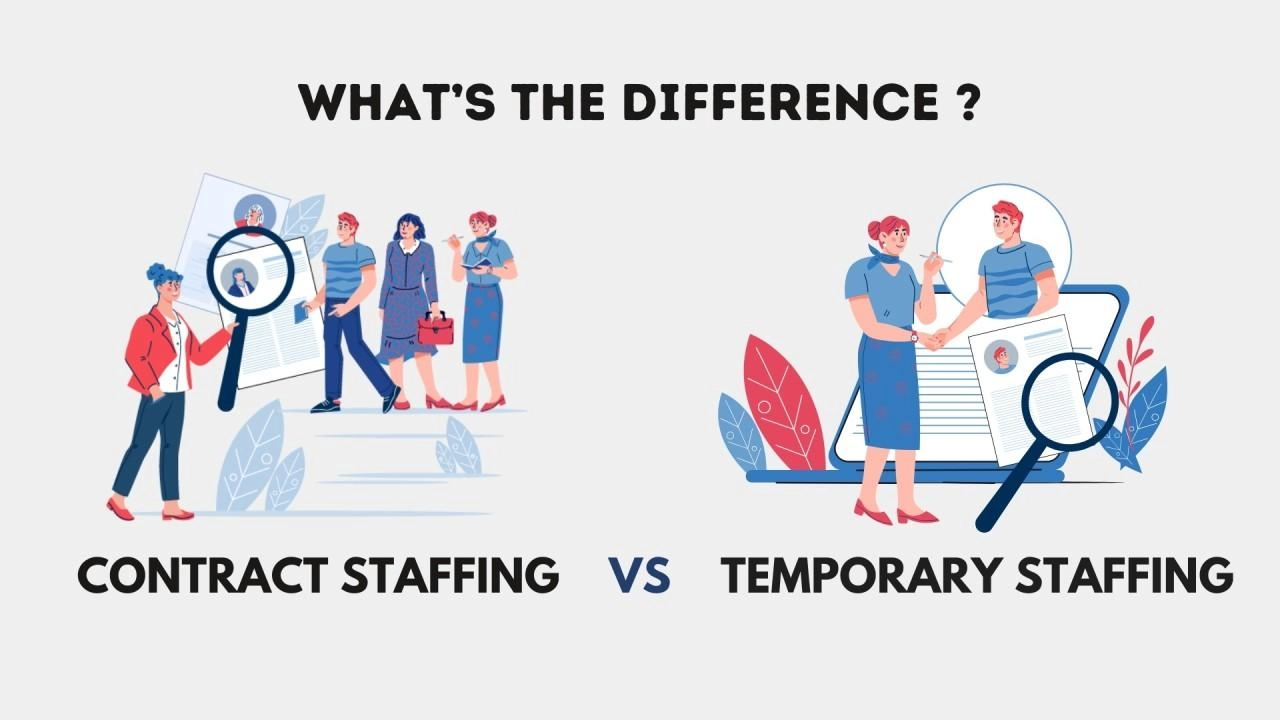
| Factor | Temporary Staffing | Contract Staffing |
| Typical duration | Days to a few months | 6–24 months, sometimes more |
| Common roles | Warehouse, retail, seasonal | IT, engineering, finance, project roles |
| Onboarding speed | 3–5 days | 1–2 weeks |
| Compliance owner | Staffing agency | Staffing agency |
| Conversion to permanent | Rare | Fairly common |
| Cost structure | Hourly or daily billing | Monthly retainer, sometimes milestone-based |
Picking A Staffing Partner — Skip The Sales Deck
The 47-slide one. With the client-logo wall that hasn’t been updated since some point in 2022. Skip it. Ask three things instead:
- Can they actually show payroll compliance records for an existing client — not just say they’re compliant
- What’s their average time-to-deploy for a role like yours. Not the best-case number they lead with
- Do they offer a replacement if the person doesn’t work out in the first 30 days
If they go quiet on any of these — that tells you something too.
Where We Fit Into This
Human Asset runs both models — temporary and contract — across manufacturing, IT, retail, logistics. Standard roles usually land within a week. Sometimes faster, depending on the city and how niche the skill is. Compliance, payroll, PF, ESIC, all handled on our side.
Not going to pretend one model fits everyone. Seasonal retail spike, that’s temp. An eleven-month product build, that’s contract. Sometimes it’s both, running side by side, which happens more often than people expect once you actually sit down and map out the workforce.
If there’s a headcount gap sitting on your desk right now and you’re not sure which model fits — that’s a fifteen-minute call, not a full proposal. Worth having before the quarter gets busy.
Short Version
Temp staffing handles short, predictable spikes. Contract staffing handles skilled, project-length gaps. Both keep compliance off your plate and get people in seats faster than a traditional hire ever would. Trade-off is loyalty and continuity — manageable, if you plan for it instead of running into it later.
Pick based on your actual demand curve. Not whichever term sounds more official in the boardroom.