AI is running through almost every stage of hiring in India right now. Screening, scheduling, interviews, the first skill match before a human even looks at the resume. But here’s the part most articles skip, and it’s the part that actually matters — candidates are using it too. Not to apply faster. To get past you.
What “AI in Recruitment” Actually Means in 2026
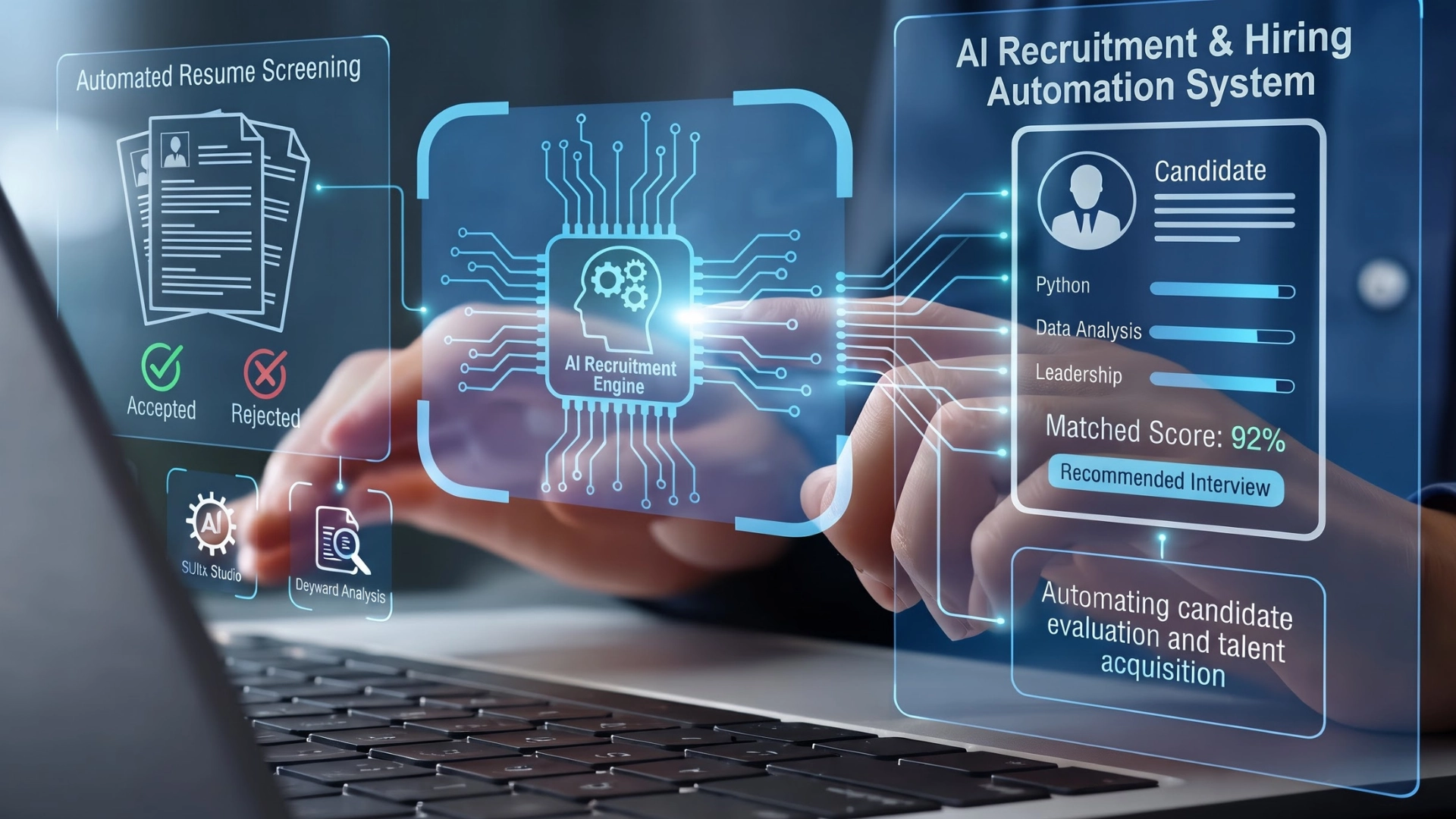
Not one tool. That’s the first thing to get straight, because half the confusion online comes from people talking about “AI hiring” like it’s a single product. It’s a stack — resume parsers, interview analysis, skill-matching algorithms, a chatbot handling the back-and-forth over scheduling, and now, agentic systems running whole chunks of the funnel with barely anyone watching.
Most Indian companies aren’t there yet. Over 80% are still sitting below what counts as advanced AI adoption — even while nearly everyone’s piloted something, a chatbot here, a resume parser there, checked the box, moved on.
That gap is the whole story, really. The difference between a company that bought a tool and one that rebuilt the process around it.
Where AI Is Actually Doing Work

| Hiring stage | What AI is doing there |
| Resume screening | Cuts manual review time by up to 60%, flags skill matches on its own |
| Interview scheduling | Chatbots run the back-and-forth, zero recruiter touch |
| Candidate evaluation | Behavioral and predictive scoring stacked on top of the interview |
| Sourcing | Agentic tools now run outreach and shortlisting with less oversight |
| Workforce planning | Moving from reactive hiring toward something closer to forecasting |
Companies running this properly are seeing 25 to 30% better candidate-role alignment. Hiring cycles shrinking by close to a third. That’s real, not hype — I’d push back on anyone calling it a game changer though, because half the gain seems to come from just… not wasting three weeks on resumes that were never going to match.
The Part Nobody’s Writing About
Here’s where it gets uncomfortable, and worth sitting with for a second. March 2026, a Bengaluru-based interview platform flags a candidate mid-call. Camera on. Answering fluently. Resume checked out clean. Turns out — not real. Synthetic face laid over a real-time feed, the whole rig. Barely made the news. Inside HR circles though, it set off something closer to a quiet panic that hasn’t really settled.
Not a one-off, either. Across thousands of AI-assisted interviews tracked between late 2025 and early 2026, flagged cheating behavior roughly tripled inside a three-month window. Technical roles get hit worst — engineering interviews flag at a much higher rate than, say, sales calls, and that tracks, because coding questions have clean checkable answers an AI assistant can just generate live, on screen, while the candidate reads it off a second monitor.
Building a convincing fake candidate — face, voice, background, the lot — takes about 70 minutes with tools anyone can download for free. Seventy minutes. Sit with that number before your next remote first round.
- Deepfake attempts in hiring are up well over 1,000% year on year
- IT and tech roles carry the largest share of flagged fraud cases
- Human reviewers catch synthetic candidates barely better than a coin flip would
Not everyone doing this is trying to deceive you, to be fair — some candidates are just leaning on a chatbot to phrase answers better under pressure, which is a different animal than a proxy interview ring. But the line between “well-coached” and “fabricated” has gotten blurrier than most screening processes were ever built to catch.
What the DPDP Act Changes for AI Hiring
If you’re screening with AI, you’re processing personal data. Resumes, video, sometimes behavioral scoring pulled off an interview. India’s DPDP Act — rules notified late 2025 — treats that as serious business now, not a formality tucked into the offer letter. Explicit consent before you collect anything. Purpose limitation. A candidate can ask you to delete their data, and you need to actually be able to do that across every system it touched, not just the main ATS.
Penalties aren’t symbolic. They run into the crores for serious violations. Double-check the exact figure before you quote it to a client though — enforcement here is young enough that the numbers keep shifting under everyone’s feet.
Skills Are Quietly Overtaking Resumes
Recruiters across India are having a harder time finding people who actually fit — a large majority say so, per LinkedIn’s most recent numbers — even while applications flood in faster than anyone can read them. Part of that’s AI-generated noise clogging the pipeline. Part of it’s a real shift underneath: most Indian recruiting professionals now expect skills-first hiring to be a real priority within the next year and a half, give or take, and searches filtered by skill instead of years-on-paper have been climbing for a while now, quietly, without much fanfare.
Degrees are losing some grip as a filter. Job titles too. What replaces them isn’t fully settled — but “can this person do the actual thing” is starting to beat “did this person study the thing” more often than it used to.
Using AI Without Losing the Human Read
None of this means unplugging the tools. It means putting a person back in at the right points — not every point, just the ones that matter.
- Keep one live, unscripted stage in the process. Somewhere a real person asks the follow-up nobody prepped for
- Verify identity before the final round, especially for remote and senior hires — a five-minute check now beats an unpleasant surprise post-offer
- Don’t let AI make the final call on leadership or client-facing roles. Score, shortlist, fine. Decide — no
- Document the AI-assisted steps as you go, not after the fact. That trail is your compliance evidence later
- Treat “too polished” as a flag, not a plus. Real candidates stumble sometimes. Stumbling’s usually the good sign, not the bad one
For technical roles specifically, where a lot of this fraud concentrates, some Indian companies lean on specialist IT recruitment services that build verification into the screening stage instead of bolting it on after. And for leadership hires — where one wrong call costs a lot more than a delayed offer ever does — working with dedicated executive hiring firms that pair AI-assisted sourcing with actual, old-fashioned reference-checking tends to hold up better than either approach running alone.
Frequently Asked Questions
Is AI replacing recruiters in India?
Not really. Not yet, anyway. It’s eating the repetitive parts — screening, scheduling — while the real decisions on senior and client-facing roles stay human, mostly because companies learned the hard way what happens when they don’t.
How common are deepfake candidates in Indian hiring right now?
Common enough that interview platforms are building detection tools specifically for it. IT and tech roles see the highest share of flagged cases, by a wide margin.
Does the DPDP Act apply to AI recruitment tools?
Yes. Any AI tool processing a candidate’s resume, video, or scoring data counts as personal data processing under the Act — consent, transparency, deletion rights, all of it applies.
What skills should recruiters build to keep up with AI-heavy hiring?
Less about learning to code, more about learning to question the output. Reading a skill-match score critically, spotting when an interview answer sounds rehearsed rather than real, knowing when to overrule the algorithm. That judgment doesn’t come from a course — it comes from getting burned once and paying attention after.
Can small and mid-size Indian companies actually afford AI hiring tools?
More than people assume. A lot of ATS platforms bundle basic screening and scheduling AI into plans that used to just be resume storage — the real cost isn’t the software, it’s the time nobody budgets for setting it up properly.
What happens if a company’s AI screening tool turns out biased?
Legally, murky ground right now — there’s no AI-specific hiring law in India yet, general anti-discrimination rules and DPDP apply but neither was written with algorithmic scoring in mind. Practically, the risk is candidates finding out, and that story traveling a lot faster than any policy fix.